Vynr began as a map. Scan a label, and the wine finds its place: country, region, appellation. The treemap fills — area as presence, geography as structure. A private atlas of what you hold.
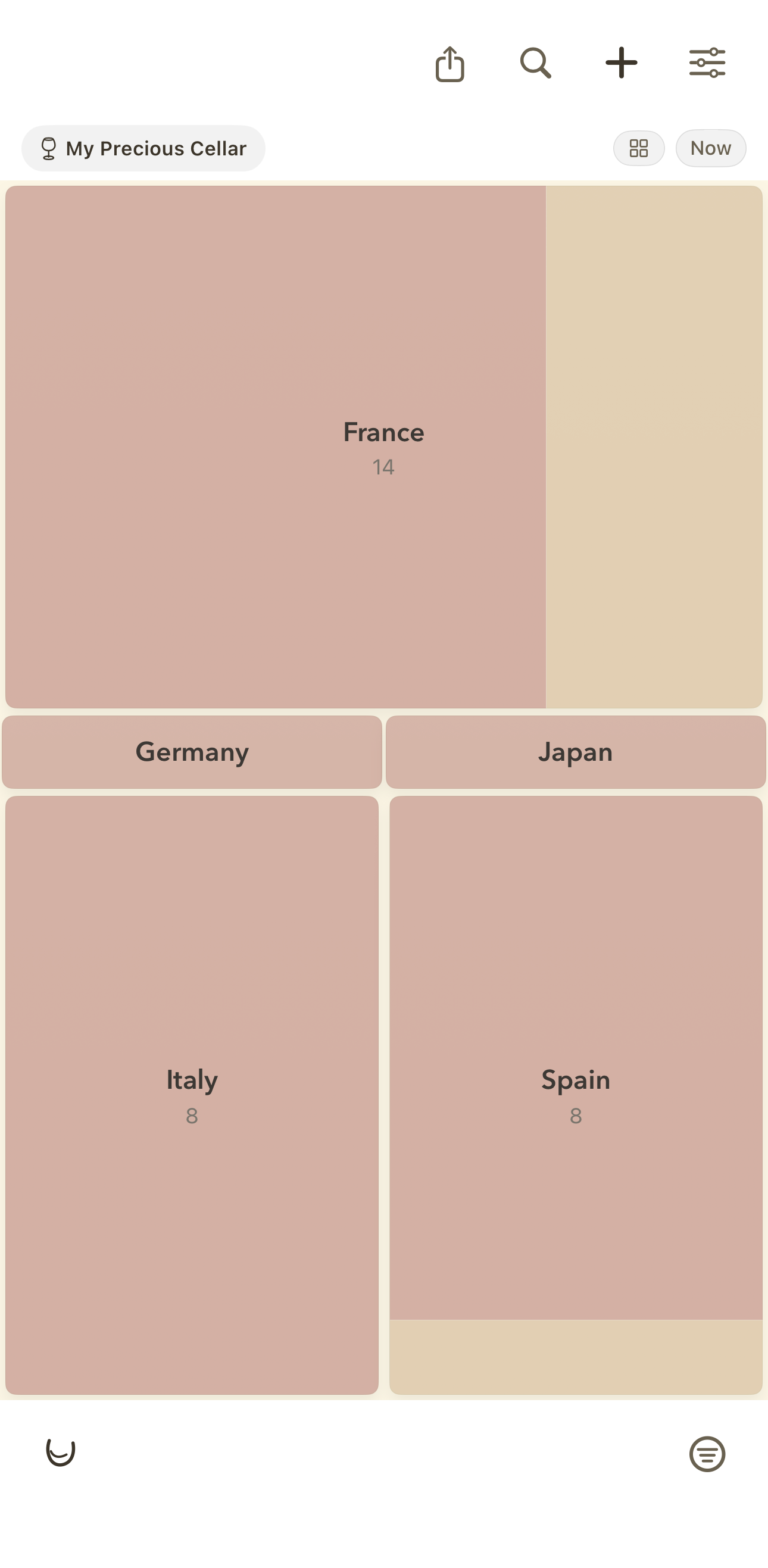
But a cellar is not a library. Bottles change. They evolve, peak, fade. The map tells you where. It cannot tell you when.
The time lens
The new time lens adds a temporal axis. Scrub forward in time and the cellar rearranges itself — not by what you own, but by what is ready.
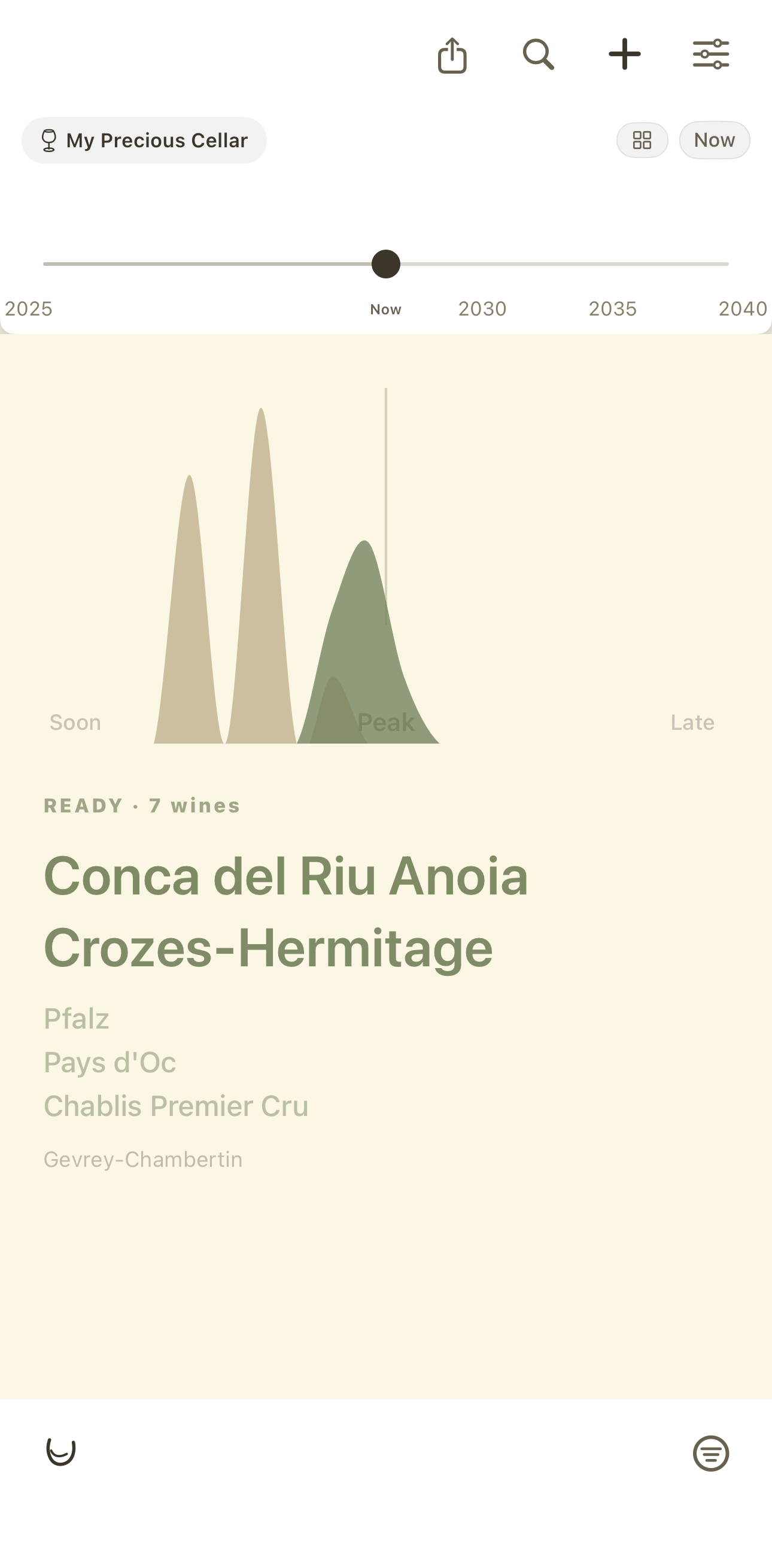
Each wine carries a drinkability curve: a projection of how it evolves from youth through peak into decline. The curves are shaped by appellation character — Barolo, for instance, declines slowly with a long asymmetric tail. These are not predictions about your bottle. They are expressions of how a wine like this behaves.
Honest shape
Confidence is structural, not cosmetic.
When the system knows less about a wine — an obscure appellation, a grape with limited aging data — the curve itself communicates that uncertainty. The peak flattens. The plateau widens. The slopes soften. The shape says "roughly here."
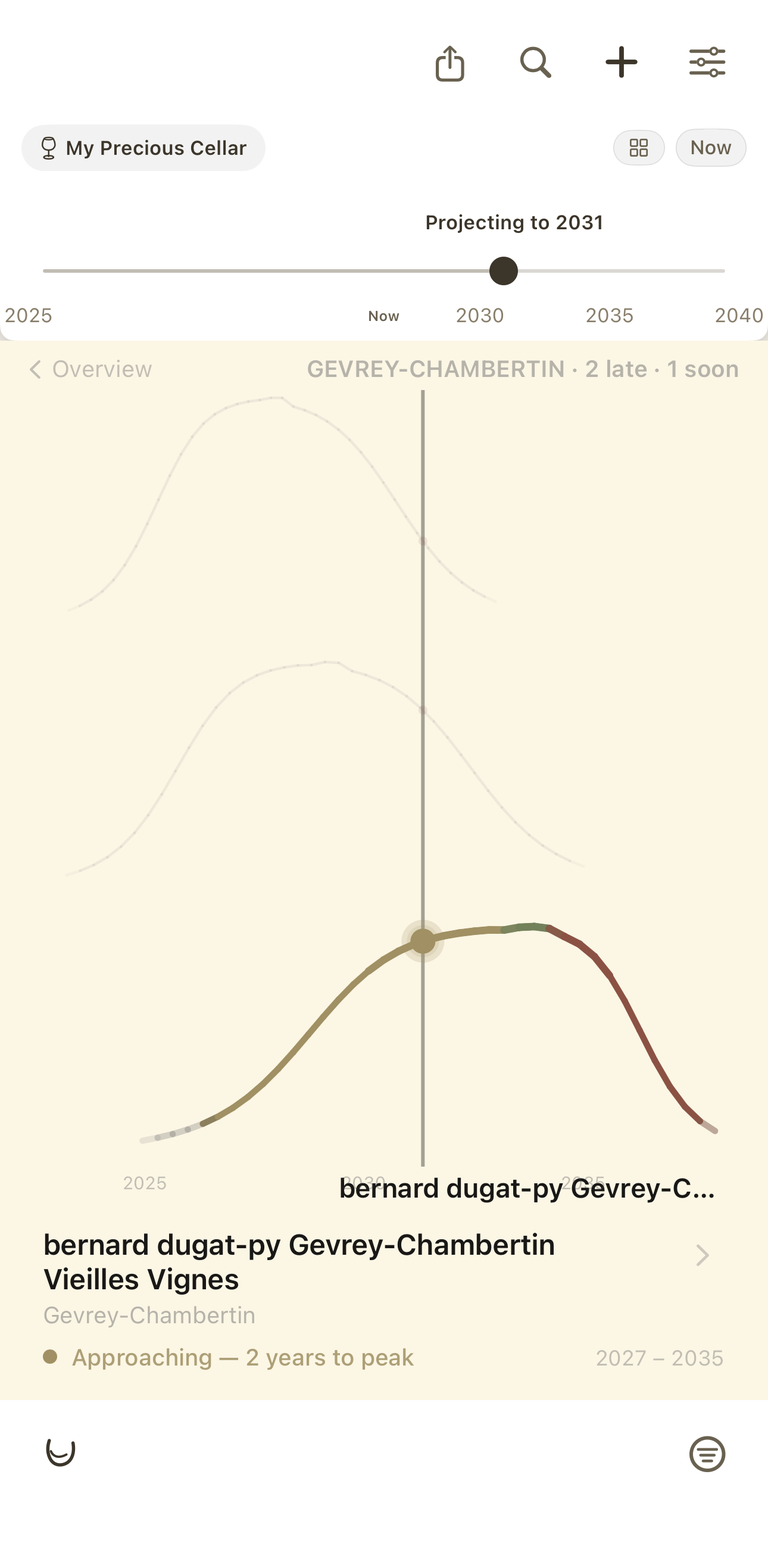
A Gevrey-Chambertin gets a narrow peak and a long, gradual decline. A wine with no appellation match gets a wide, low, uncertain curve — caution rather than confidence.
Where meets when
The atlas and the time lens are two views of the same cellar. Geography organises what you have. Time organises when to open it. Drill into an appellation at a future date and you see which bottles are approaching, which are at peak, which are fading. Instead of a single spike, readiness spreads — different regions rise and fall at different times.
Wine people forgive wrong timing. They do not forgive unjustified certainty. A curve that says "roughly here, but we're not sure" earns trust. A curve that says "precisely here" and is wrong destroys it.
Soft cellar light —
you know before you reach
when it is time
Your wines. In place. In time.