The Time Lens is how you move through your cellar in time — what you've drunk, what's ready now, what's still coming up. I built it, and then I kept building. For weeks it grew more elaborate, and I was pleased with it.
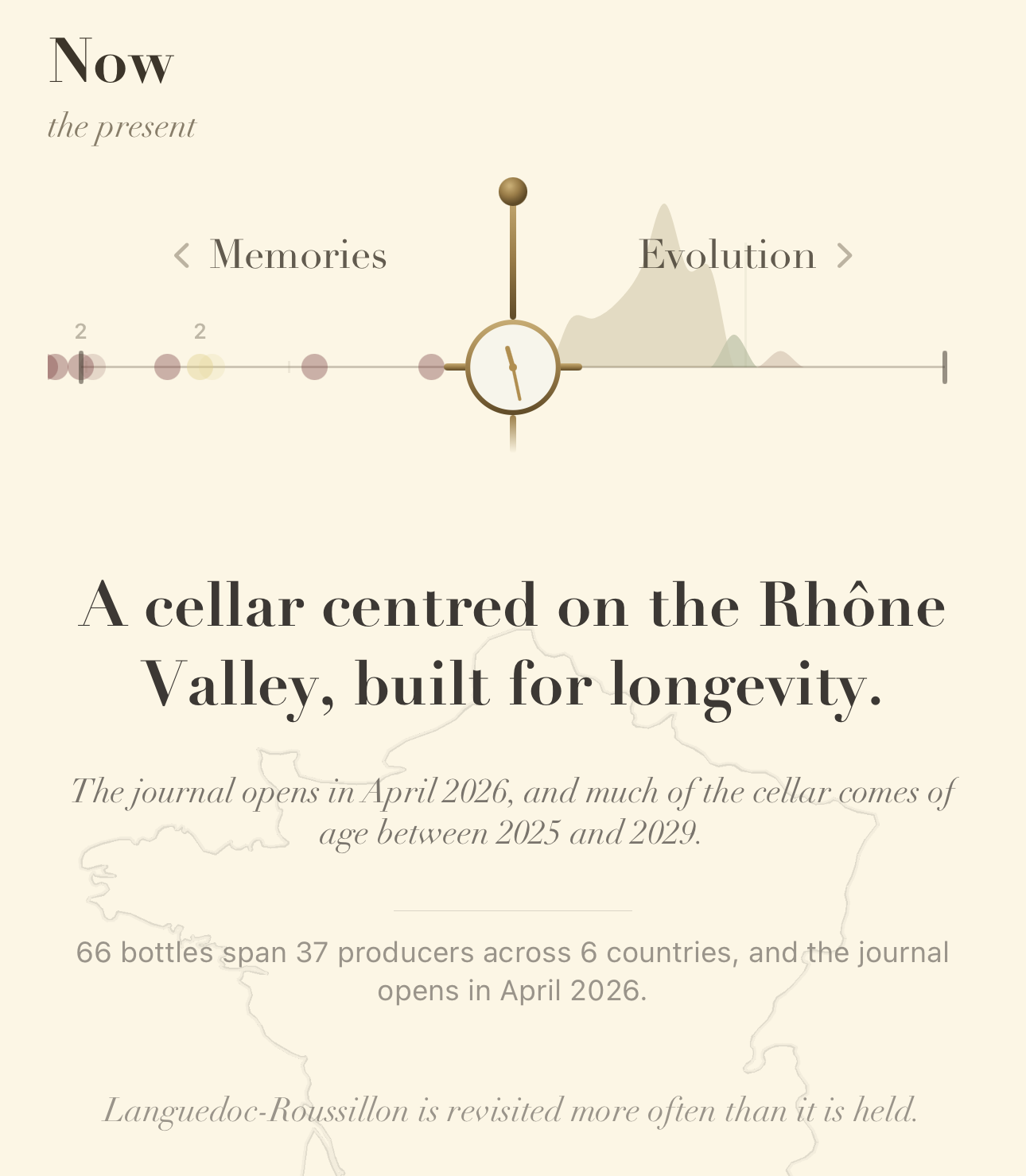
A scrubber with a coloured notch for every bottle. An engraved clock in the middle. A mountain curve behind it. Memories and Evolution with their arrows. A headline, a subtitle, a second subtitle, and a map ghosted under all of it. I'd fallen for the concept and kept decorating it.
We have a test for this: does a screen answer what is this? or how should I feel? This one only ever answered the second — loudly — before it had told you anything true about your cellar.
The reset
Eventually I admitted it was too complex, and did the thing I always seem to end up doing when that happens: I took my journal to a café and drew it. (It's becoming a pattern — the maps got fixed the same way.)
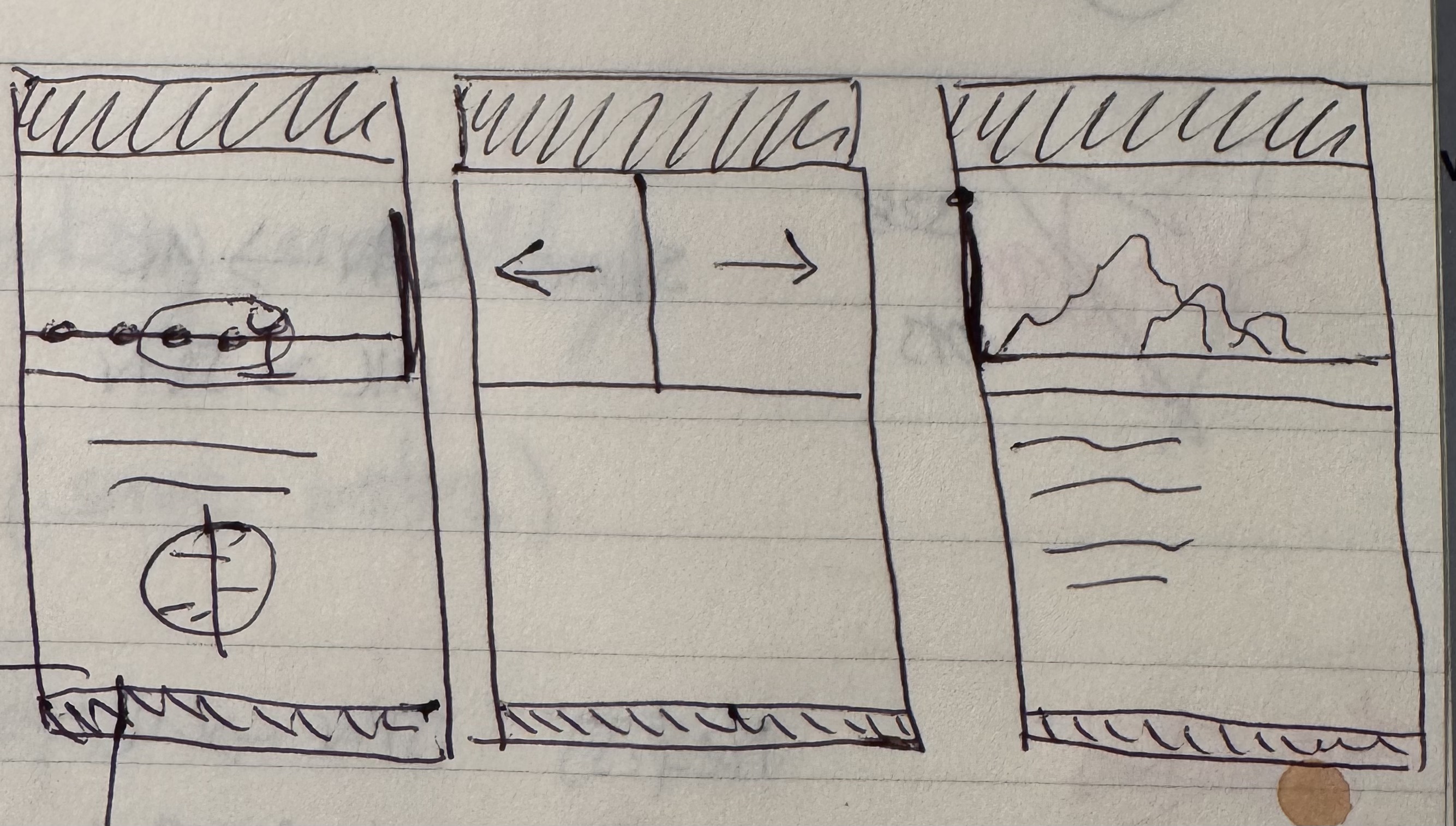
Three panels — past, now, future — and nothing else. This isn't where I'd started; the build came first and the clutter after. The sketch was a reset: the idea stripped back to the only three things it actually needed, on paper, where adding a clock takes real effort instead of one more component.
Cutting it back
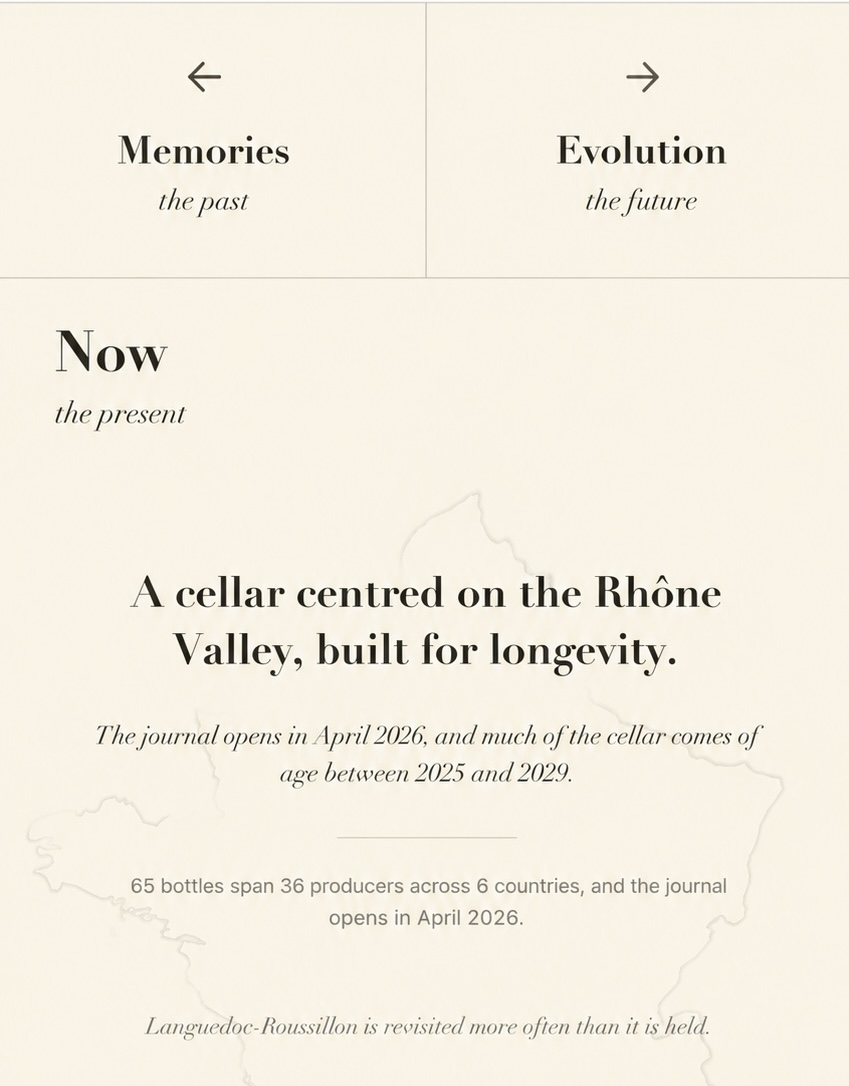
So it was mostly deletion. The scrubber, the clock, the mountain — gone. What was left were the three modes, one line of copy, and the numbers.
The signal that it worked wasn't that it looked better. It was that I stopped thinking about it. I'd open the Time Lens and think about which bottles were ready to drink, not about the interface.
The complicated part

That's the vynr codebase — every point a function, every line a dependency. It is genuinely complex. But it isn't one big complicated thing; it's a great many simple things laid over each other. One piece reads a label. One resolves an appellation. One shapes an ageing curve. One scores how much to trust the rest. None is clever on its own — but superpose enough of them and you can model a cellar, which is a far messier problem than it looks: geography, vintages, how a wine changes over years, and a great deal of honest doubt.
That's the complexity the problem actually demands. And it has to live somewhere. So simplifying the screen was the easy part — the hard part is everything in that picture: building enough of it to hold the problem, then keeping all of it underneath and handing you back something simple, and beautiful, that you never have to think about. Three plain doors over a whole modelled world.
That struggle — between the complexity the problem demands and the simplicity it deserves —
That's vynr.