I did not want a cellar tracker.
I wanted a memory.
Wine apps track bottles. They do not remember experiences.
Vynr is an atlas first — place, then bottle, then moment.
A journal should not feel like a spreadsheet.
It should feel like returning to somewhere you once were.
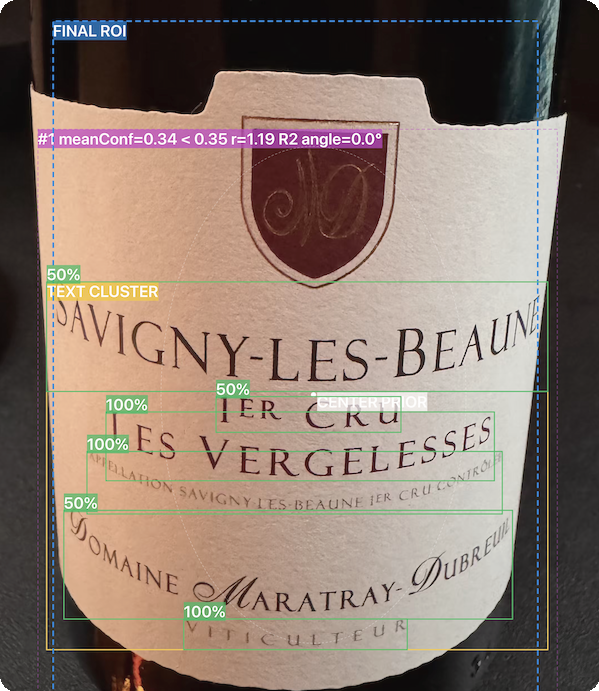
A label arrives in your hand and .. well, it can be a little unclear. At least to me.
Savigny-les-Beaune. Premier Cru. Les Vergelesses. A name, a rank, a vineyard. Cream paper, serif type, a family crest. It is beautiful in the way that all wine labels are beautiful — it assumes you already know. And I usually don't.
What we know is the table. The restaurant with the bad lighting and the good bread. The person across from us. The weight of the glass. The colour against the tablecloth. The moment someone said something that mattered. The label holds none of that. It holds geography, classification, a family name. It holds everything except what happened.
And years compress faster than anyone expects — the details go first, then the sequence, until only fragments remain: a colour, a season, a feeling you can't quite place.
A map of time
Bordeaux. Rhone Valley. Champagne. Alsace. Regions, sized by something.
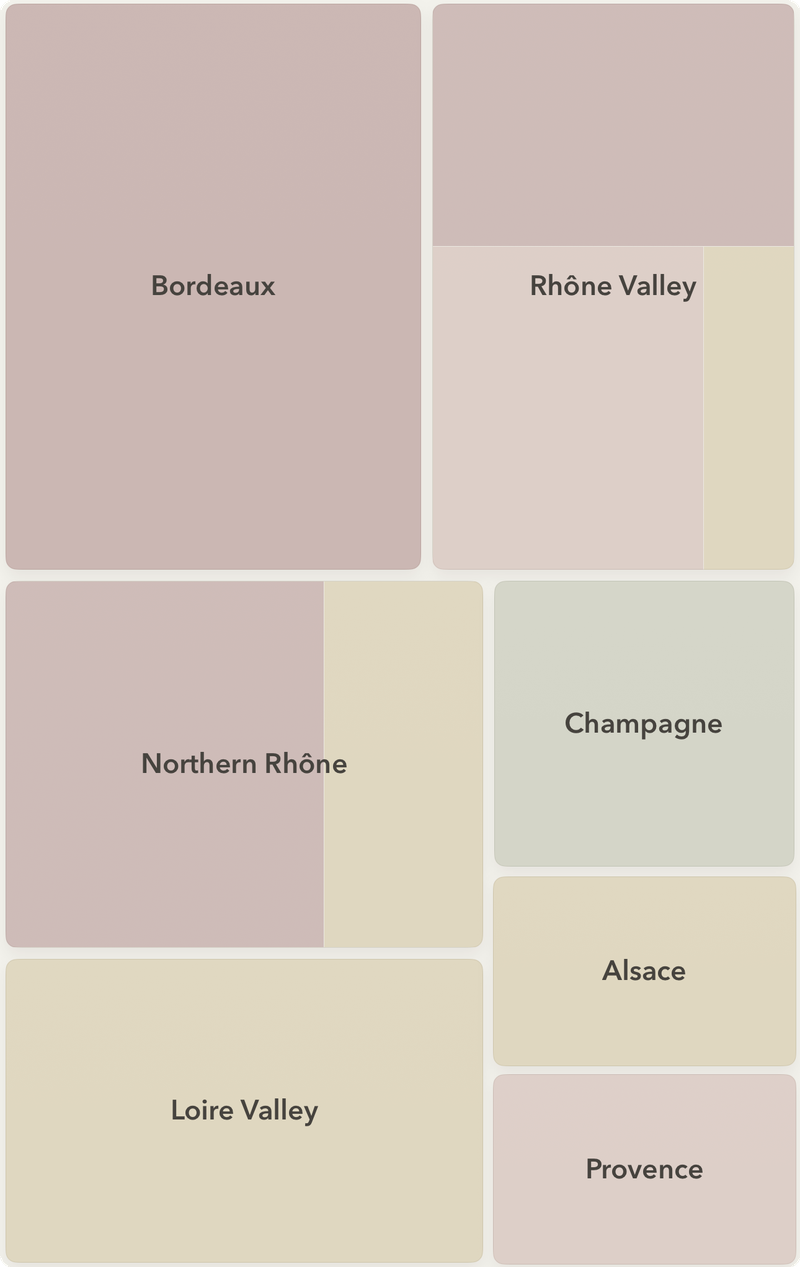
A large Bordeaux tile is the year you kept going back to that place… A small Alsace tile is somewhere you haven't visited much.
Why wine
Nothing captures atmosphere — the particular texture of an evening, whether the conversation was easy or careful, whether you were happy and knew it or happy and didn't.
Wine recurs — at dinners, on trips, at celebrations, at endings — often enough to become a thread through adult life. A bottle remembered is never just a bottle. Most people have bottles they remember. Not the vintage or the appellation — the evening. The journal already exists. It just isn't written down.
What sits quietly beneath
Behind every tile, context waits. The grapes that grow in a place. The climate that shapes them. The character of a region, held in careful sentences.
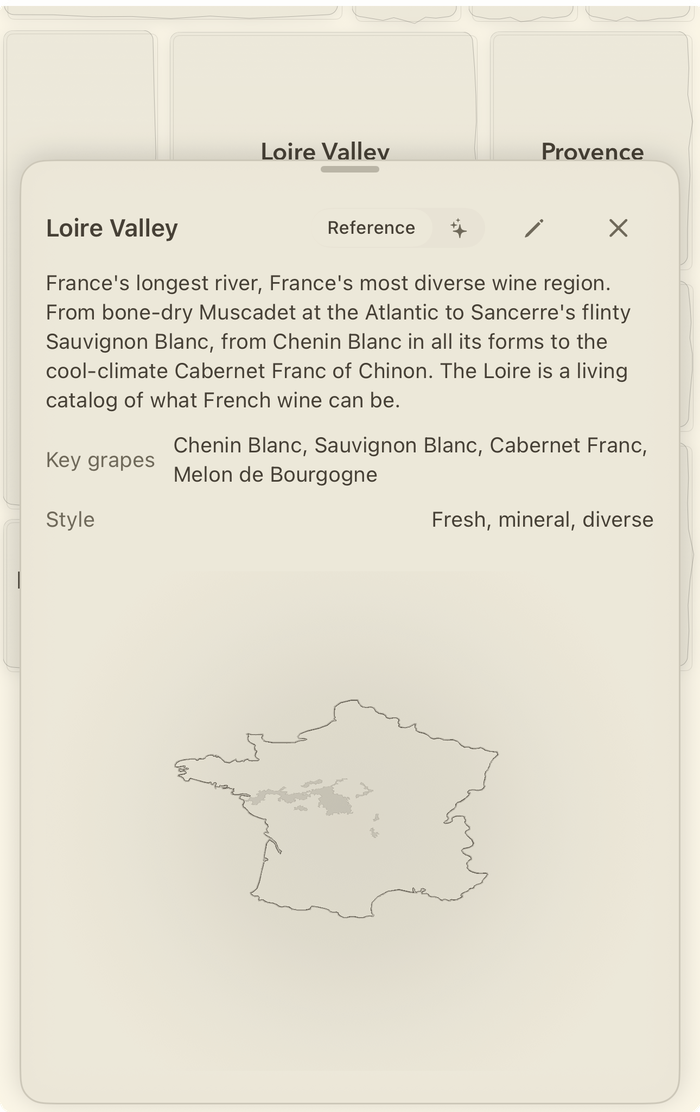
You don't need any of this. But when you're curious — when you want to understand why a wine tasted the way it did, or what connects the bottles you keep choosing — it's there. Quietly. Like a reference book that never insists on being read.
The shape of where you've been
Tap into Bordeaux and the world opens. Medoc. Graves. Pomerol. Saint-Emilion. Dozens of names, each holding evenings you may have forgotten you had.
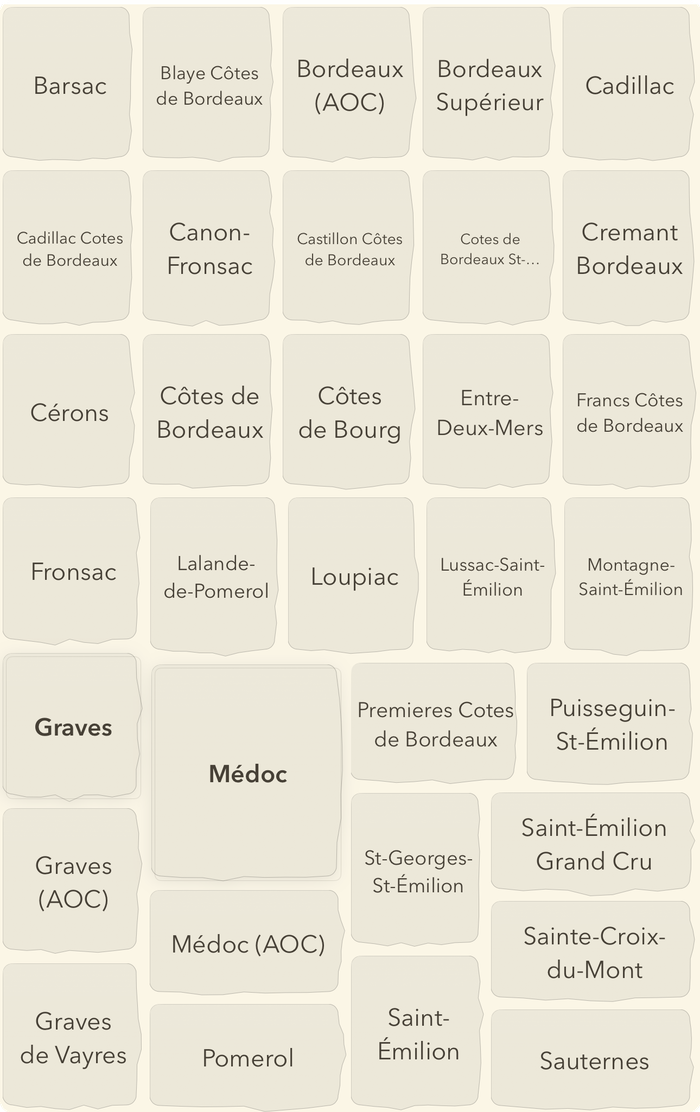
You didn't plan to explore the Right Bank. But you did — dinner by dinner, bottle by bottle, without ever consulting a map.
A quiet record
Wine won't preserve everything. But it can anchor what remains — a date, a place, a name, a note — so that when you return, the rest comes back.
The bread. The lighting. The person across the table.