vynr 1.2 is the foundation.
The cellar. The journal. The atlas.
Built as one design, each useful on its own.
But they were always meant to work together.
Now that all three are live, I can start building the ideas that need them all at once.
A wine you've enjoyed is more than a bottle in your cellar. It comes from somewhere. It has a producer, a landscape, a history, and connections to wines you may never have come across.
What if you could start with that one bottle and follow those connections wherever they lead?
Here's the first thing I've built to do that. It's still in development, but it's working, and I'm excited about it.
It starts with your wine
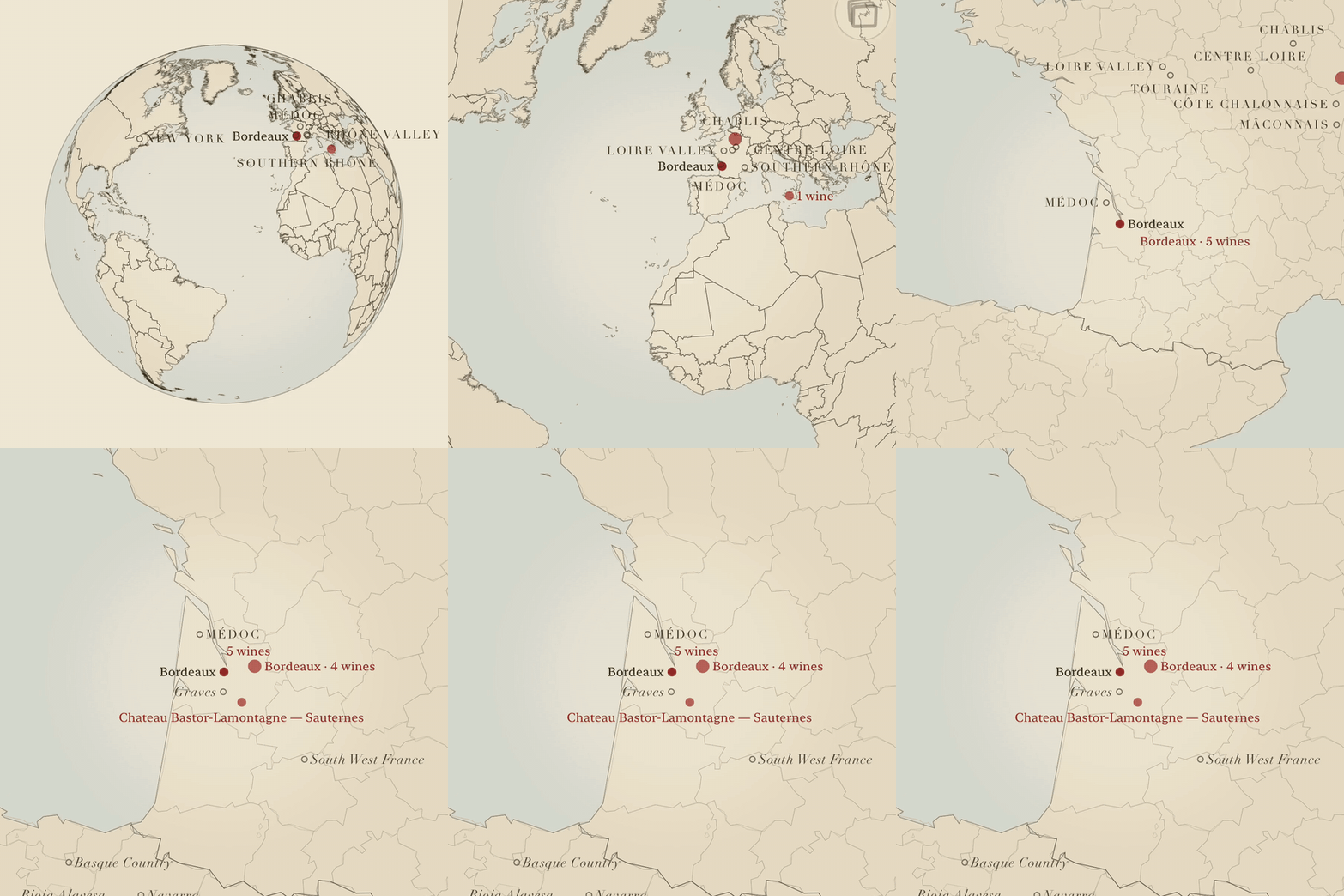
Pick a wine in your cellar, or the place it comes from. Start an excursion, and vynr opens on the whole globe and flies down to it — that's the clip at the top.
You land on a real map of the place, not a list or a page.
And opens up a world
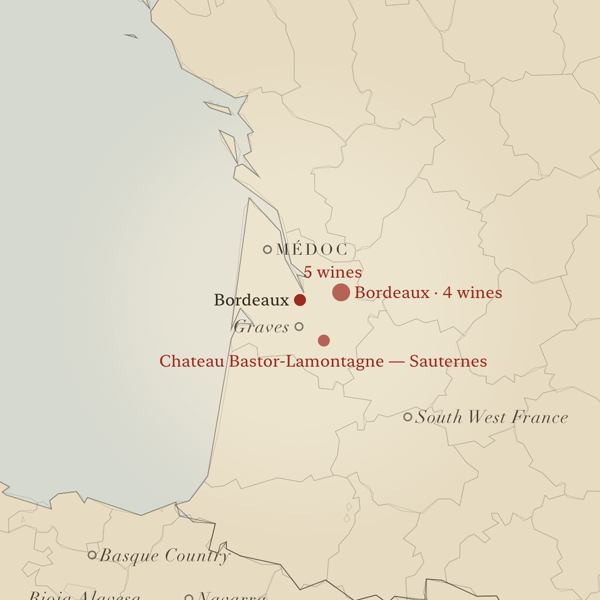
Around Bordeaux, the connections begin to appear: the places within it, the grapes grown there, the wines you've collected from there, the notes you've written, and what Vynrpedia has to say. Explore them one at a time, following whatever catches your interest.
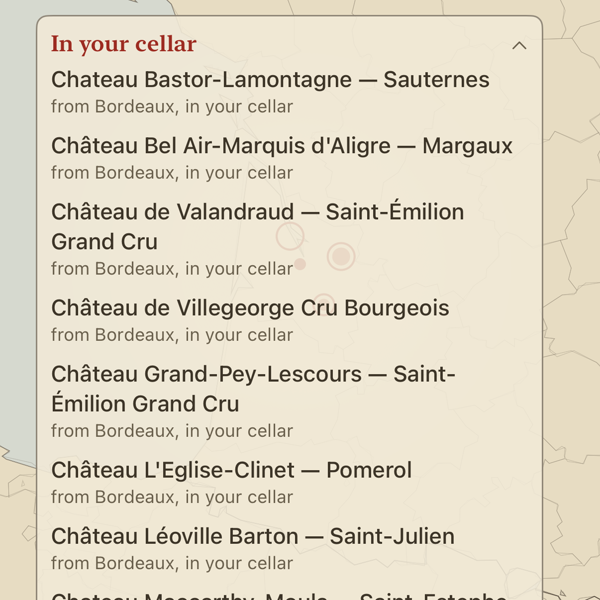
Here are your own Bordeaux wines:
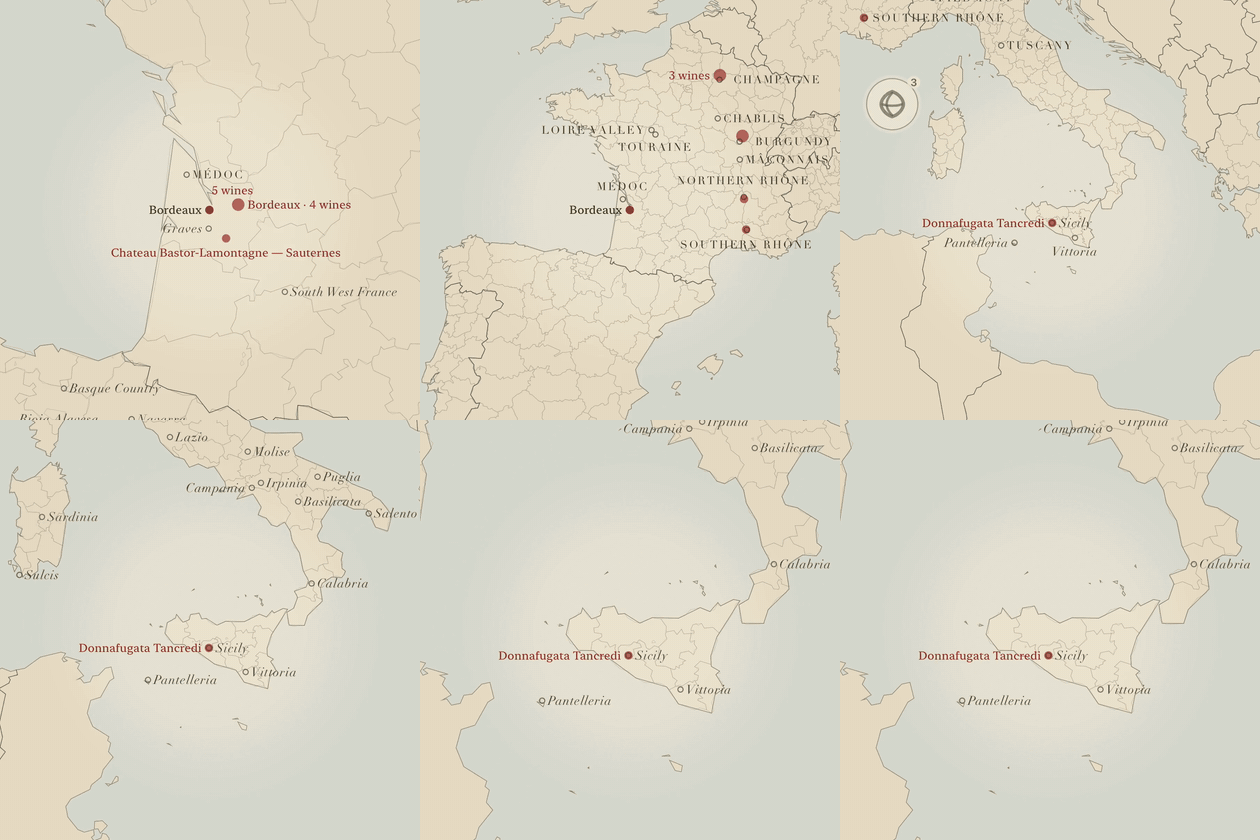
And you're not confined to where you began. Pan and zoom wherever your curiosity goes: new places bring their own notes with them, and you stay on what you were exploring until you choose to follow something else. When you're done, one gesture takes you back to where you started.
Places, memories, connections
This is where the three parts meet.
- Your cellar knows where each wine comes from.
- Your journal knows what you thought of it.
- The atlas knows what's around it.
An excursion shows all three on one map. Your own records are in red. What vynr knows about the wider world is in the atlas's usual ink, so you can always tell which is yours.
You can follow connections, from a place to its grapes or from a grape to where it's grown, and vynr shows why each step is connected. It only shows real relationships: if vynr knows little about a place, you'll see less, not filler.
It works in two directions. Inward, it explains your own wines and memories through their places, producers and history. Outward, it leads you into the parts of the wine world you haven't explored yet.
Say you wrote about a Saint-Émilion after a dinner last spring. Open Bordeaux and that note is there, in red. Follow Bordeaux's grapes to Cabernet Franc, then to where else it's grown, and the map carries you up to the Loire — somewhere you've never bought a bottle from.
That's the part that matters most to me. It's a way to browse the atlas if you're learning about wine, shaped by what you've tasted and showing you what you haven't. It's a reason to open vynr when there's no new bottle to scan.
Excursions, taking shape in vynr
Start with a place, a wine, a producer or even a grape. Each opens a different path through the atlas, and every connection comes with its reason. Starting from a journal entry comes later.
There's still plenty to build. But this is what I've been working towards since the beginning: a wine collection that doesn't just record what you've discovered, but helps you discover what comes next.
Excursions are coming soon.