Back in February, I wrote:
I did not want a cellar tracker.
I wanted a memory.
Today, vynr is available on the App Store.
That is a small sentence for something that has occupied a very large part of my life.
What vynr became
The original idea is still there: a wine label is the beginning of a story, not the story itself.
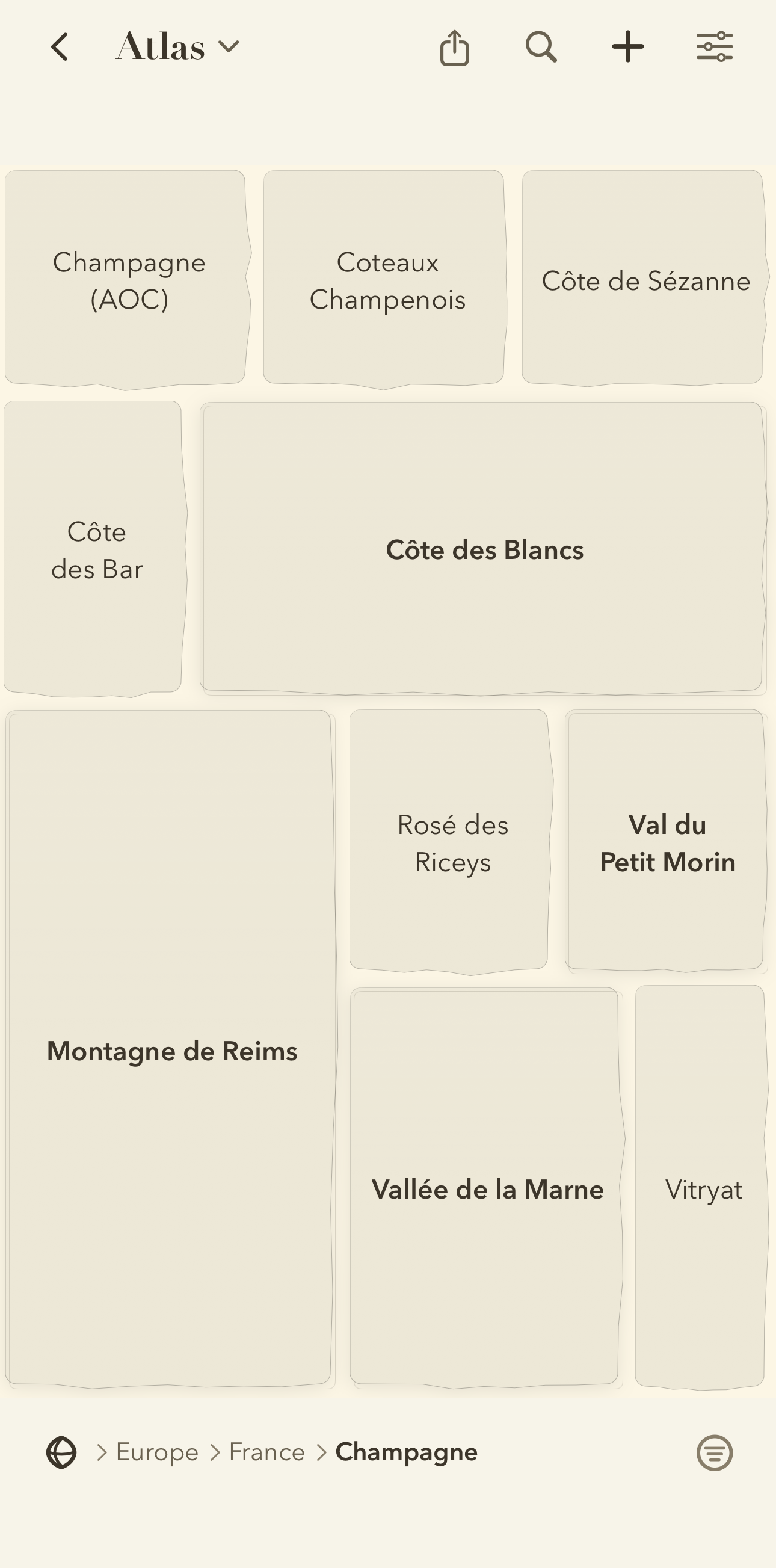
Photograph a label and vynr helps identify what is in front of you. Follow the wine into its producer, appellation and region. Move outward through the Atlas and understand where it belongs.
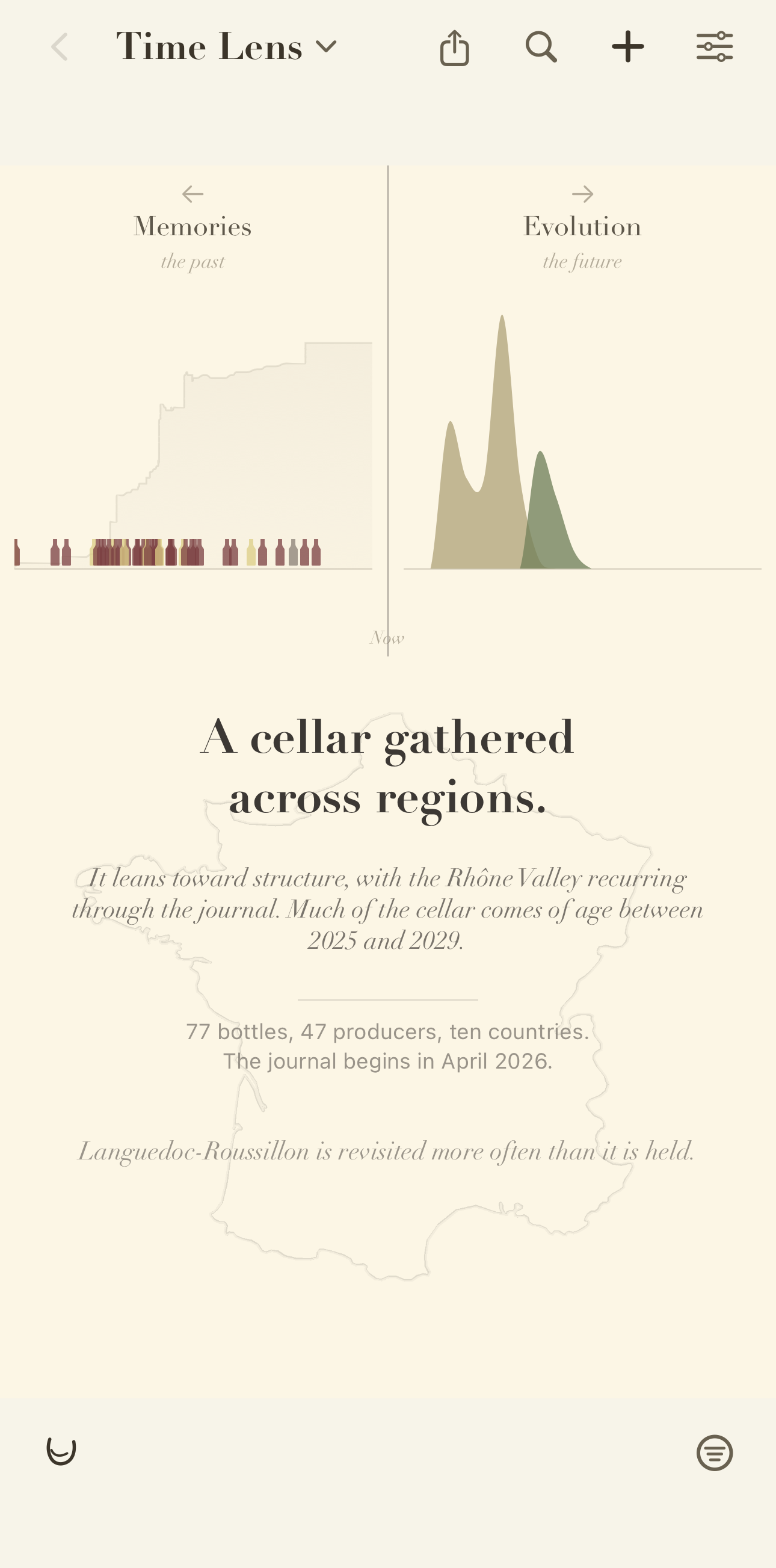
Then look at the cellar through time.
The Time Lens looks backwards across what has entered and left, and forwards towards bottles approaching their moment. It is guidance rather than prophecy—an invitation to think about what to open now, what can wait, and what might otherwise be overlooked.
But the Journal is where the idea resolves.
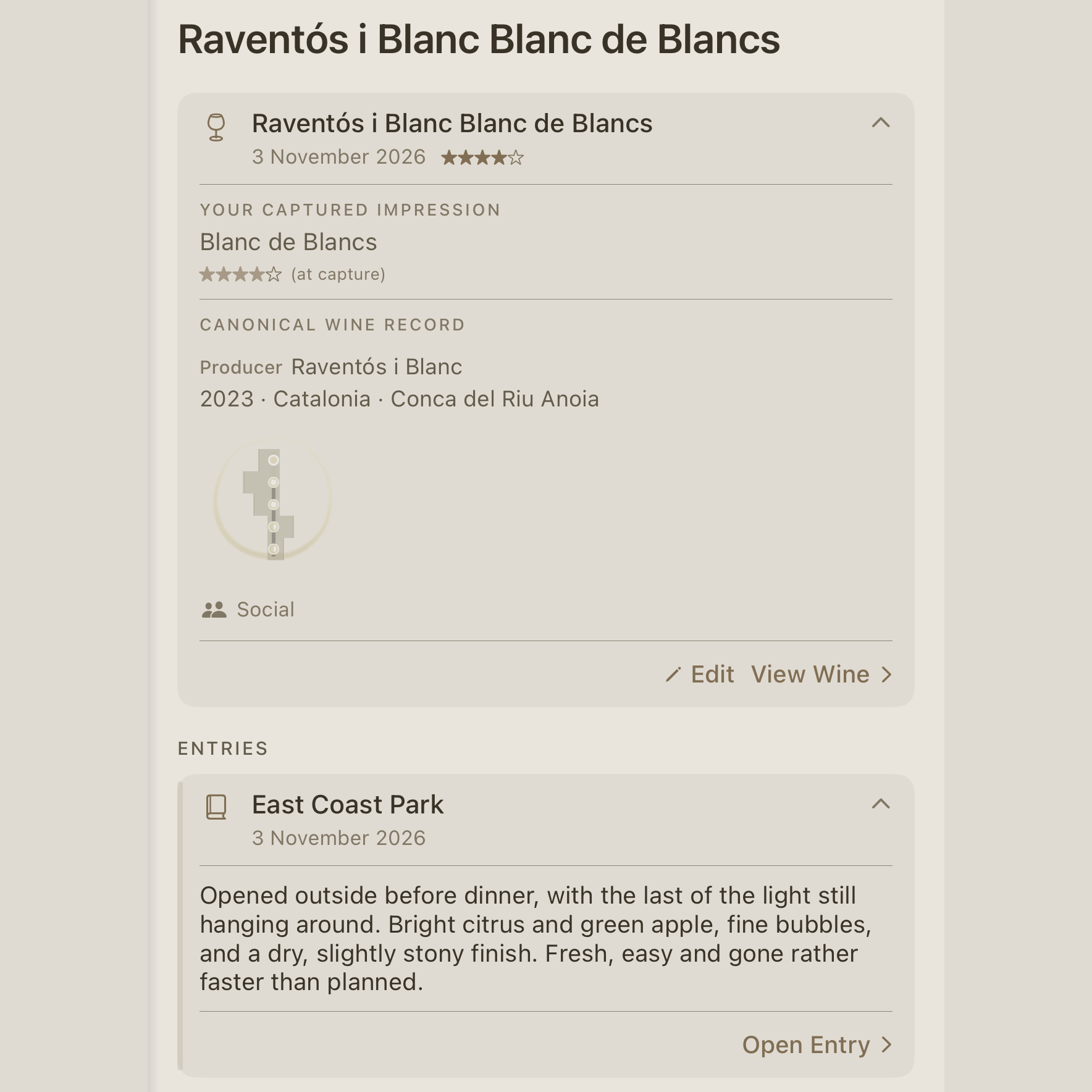
A bottle is rarely memorable because it occupied position twelve in a rack. It is memorable because of where you were, who was there, what you noticed, what you talked about, and whether the wine seemed different when you returned to it years later.
The Journal keeps the tasting, photographs, notes and place beside the wine itself. It lets a bottle remain connected to the knowledge around it without allowing that knowledge to crowd out your own experience.
That is the heart of vynr: understand the wine, explore its place, plan what comes next, and keep the life around every bottle. It carries no advertising, asks for no account, and is private by default.
The quiet part
I have been quiet for a while.
It was not because work on vynr stopped. It was because the work changed.
For a long time, progress was easy to see. A map appeared where there had been a list. The Time Lens began moving through the cellar. A label became a wine, a producer and a place. New ideas arrived quickly enough that every week seemed to produce another visible piece.
Then I stopped adding things.
There is an awkward stage in building software when it looks finished but is not yet ready. The main ideas are present. The screenshots look convincing. Most paths work most of the time. It is tempting to keep moving—to add the next feature because adding is more satisfying than asking what happens when the text is unusually long, the screen unusually short, the network unavailable, or a person changes their mind halfway through something important.
So the last few months were spent making the existing app trustworthy.
When a label is only half legible, vynr now leaves the field empty for you to complete rather than guessing at a producer it cannot read. Start a tasting and no stray swipe can carry you off to another screen until you have saved it or let it go. An iCloud backup was restored after a clean reinstall and reconciled against the original cellar—wines, journal entries and photographs—before I was willing to trust it with anyone else’s.
The changes became less impressive to describe and more important to live with.
The last test came from an unexpectedly small place: the iPhone compatibility window on an iPad. On the second review, Apple’s reviewer found a tasting screen that became crowded there. They were right. Fixing it made the app more adaptable everywhere—and after more builds, screenshots, forms and waiting than I expected, the gate finally opened.
A foundation, not a finish
This release puts the foundations in place for many of the ideas I still want to explore.
The Journal will become deeper and more expressive: a place to return to tastings, compare memories, learn from them, and eventually compose them into something larger. The Time Lens will become more useful for planning. The Atlas and vynr’s wine knowledge will keep growing.
Then there is sharing. A cellar in vynr is not a feed and never will be, but it can be handed to someone. Today you can publish a snapshot—with your notes in the margins—and anyone can open it by link or QR code, in the app or a browser, without an account. They can explore it and copy a wine into their own cellar.
What comes next builds on that same idea: tastings, study sets and events experienced together, while each person’s impressions remain their own. Reading stays free. Nothing a reader tastes flows back to whoever shared it. Nothing is ranked by who paid.
Those directions—and the principles that should survive every release—are set out in the public roadmap.
But a roadmap written by the person building the app can only go so far. Now vynr has to meet other people’s cellars, habits and expectations.
So please try it. Tell me what is confusing. Tell me what is wrong. Tell me what feels unnecessary, and what you expected to find but could not. Criticism is useful; ideas are welcome; a label that vynr cannot read is evidence that can make the next one better.
The app no longer belongs only to the person testing it late at night.
It is on the App Store, and now it is in your hands.
Just wine, remembered.